


Hi there!
Build v.s. buy must be on every ops person’s mind right now.
This week I received this newsletter (via Sarah the co-author) on building versus buying martech.
And then, Charlie told me he was going to write the following post below.
I definitely agree with most of the thoughts in the post below, and I think Charlie’s story will also prove the answer about a CRM unanimous.
So I will give it away to Charlie now…
After months of warning people about vibe-coded CRMs, I accidentally built one for CS2.
I say accidentally because my goal was to build an internal tool to track CS2 client health. Things like: how each client engagement is going, where we can improve, where we are crushing it, utilization, sentiment, what stakeholders are involved, etc. And then to surface actions for our team to keep improving our work for clients.
I talked about it a bit in this LinkedIn post where I explained how much of building agents is really just data work, and I showed this image of the data pipelines being built that feed into it.
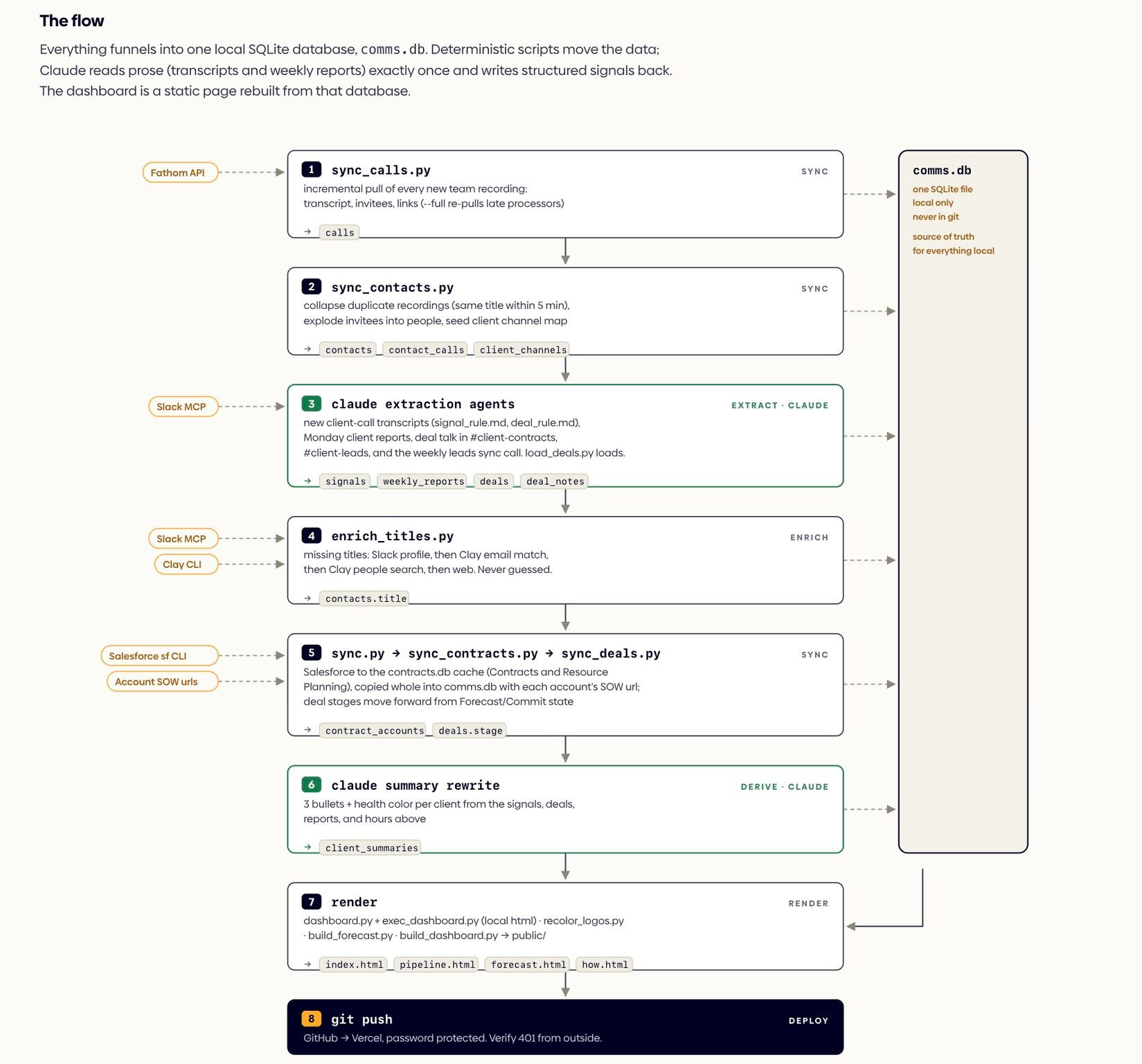
I am pulling in Slack data, call recordings, internal client calls, call attendance data, ClickUp project management data, and delivery data. All running through a data pipeline where it’s sorted, analyzed, and stored in a centralized database for agents to reason over and to surface important information to Crissy, me, and the team.
Some of the highlights are:
Stakeholder management: We can now track call attendance across clients, enrich the contacts with Clay so we can see their titles, and monitor to see if we are losing stakeholder interest or if important stakeholders leave the company and we need to engage another point of contact.
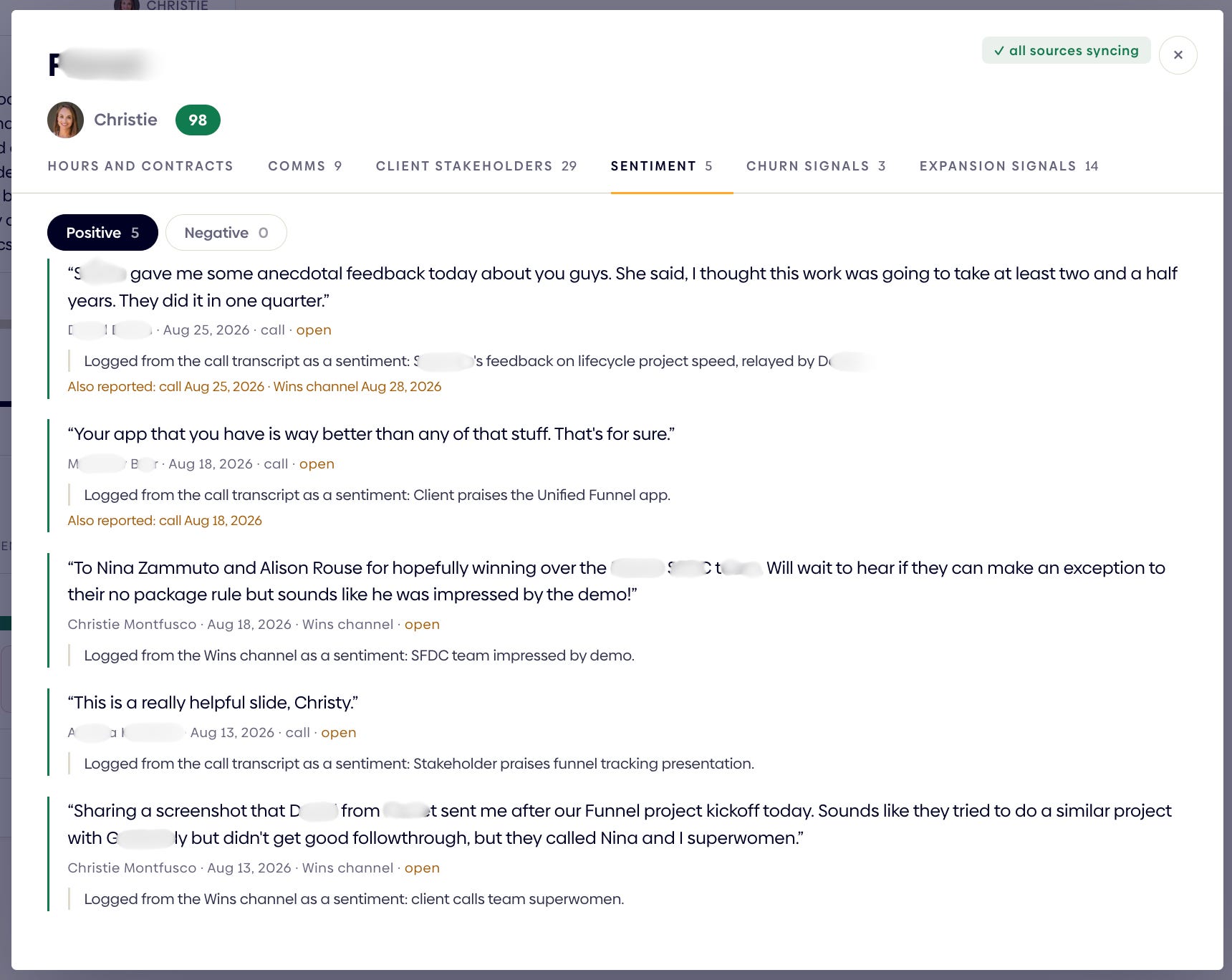
Sentiment analysis: All the positive and any negative statements on calls or in Slack are captured and analyzed to help us understand how our clients are feeling about the engagement.
Client Health at a Glance: We have a 4x4 grid and score to map clients to see which ones have the most opportunity to do more great work vs. which clients need extra focus
Quick TLDR summaries: Each with quotes and data on every client so Crissy and I can easily get a sense for how everything is going across all clients without having to get our team to write out long updates each week.
It’s magical, has been a lot of fun to build, and has instantly become our daily hub to monitor and improve CS2 each week.
What does this have to do with “vibe-coding” a CRM?
Well, as I built this out, I realized I basically built the plumbing to gather a lot of the typical data we would need for a CRM. The only thing that seemed to be missing was the sales/pipeline management.
So I worked with Claude Code to build it, and in a couple of hours, I had a place where I could manage all new business deals and any customer deals.
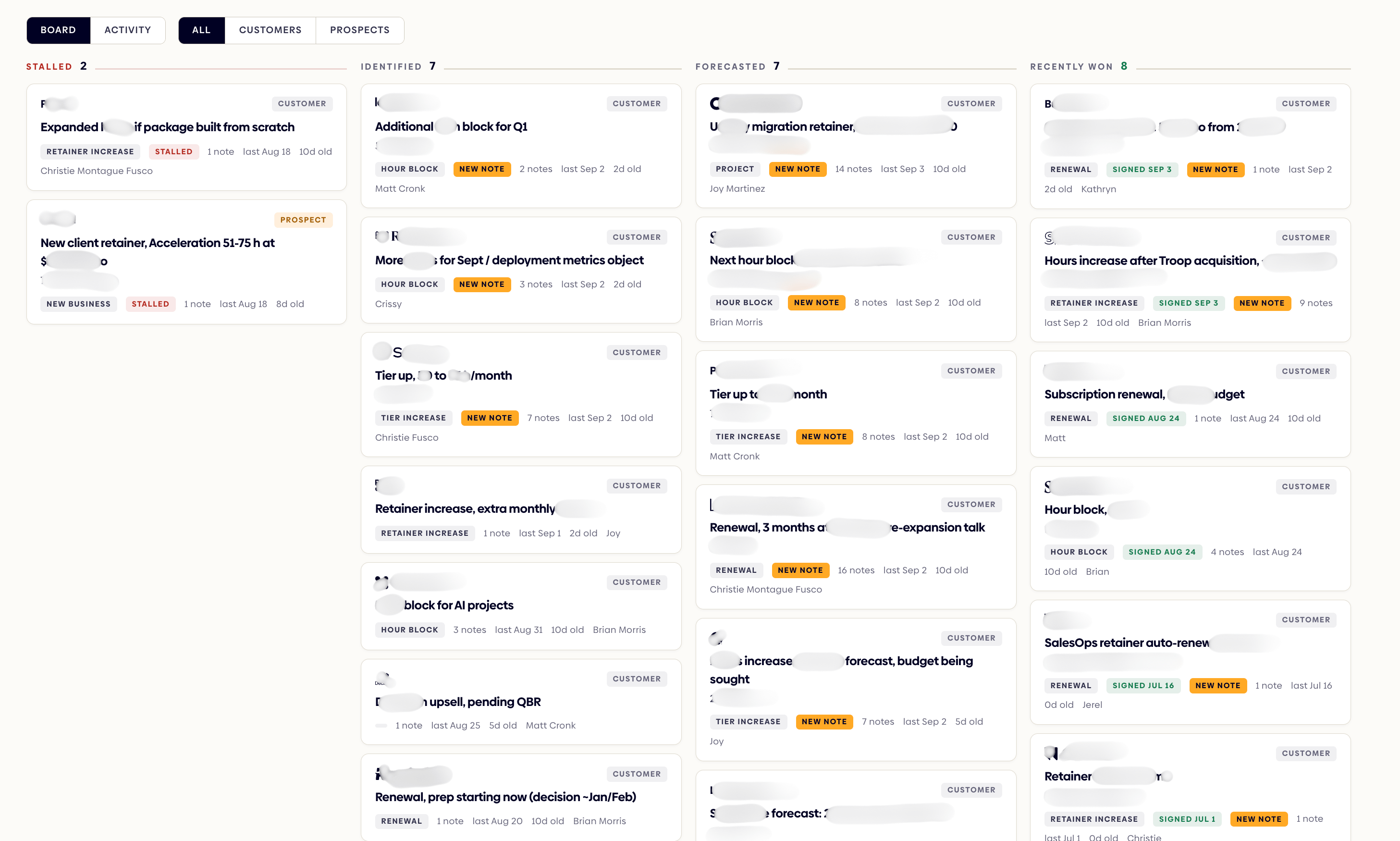
What was awesome about this is that because I already had all the data pipelines, analysis, and tables built, it all could flow into the deals.
For example, if a client needs to expand their relationship with us, it is usually captured in a call or Slack message. I was already bringing that data into the Client Health system, so then I just made sure it was also tied to my deal database.
This means that on every deal, I have all the activity tracked, the sentiment of the client, who we are speaking with (and stakeholders we are not but should be), what is going on at that client, auto-stage progression, etc.
And with AI reasoning over all of that data every day, it can help give the leadership team at CS2 a quick summary of what we need to know to progress things.
I didn’t set out to do this, but I built an agentic CRM for pipeline management that gathers all the context I need, moves stages, and helps me manage my client contacts and sales pipeline end to end.
So that is the long story of how I use agentic coding (my preferred term over vibe coding) to build the “new CRM” at CS2.
Should B2B tech companies create their own CRM?
If you are reading this and are anything like our clients (scale up to Enterprise B2B tech and AI companies), I do not recommend you do all of this. But I recommend you do part of this.
It’s quite nuanced, so keep reading.
What you should NOT do:
TLDR: You should not agentically code a CRM from the ground up.
If you have SFDC or HubSpot as your CRM, keep it.
The underlying architecture of what I built is great for a 15-person company like us that has one person managing the sales process (me), relatively low-complexity internal business processes, and is ok with this running locally on my computer (for now) and using up ALL my Claude Fable usage every day.
My build would not be ok for a company that has tons of salespeople, lots of complex business processes, requirements around permissions and access, 100% uptime/reliability needs, requirements for a support team, a UI for sales/analysts/etc processes, and a ton more that true enterprise CRMs offer.
The cost/benefit just does not work out once you factor in the time, effort, resources, and lost productivity you would experience if you tried to rebuild Salesforce or Hubspot from scratch and then release it into a bigger org with salespeople and many other internal stakeholders.
There is a reason why Anthropic uses Salesforce. And there is a reason they have partnered to create Claudeforce.
What you should learn from this (and can probably apply to your org):
TLDR: build your “intelligence layer” custom yourself (for now). Or get CS2 to build it 😀.
The intelligence layer is all the stuff I talked about at the beginning of this post. The data pipelines to gather unstructured data from various sources, AI reasoning/analyzing that data and structuring it, the dashboard/views/automation driven by this data. You can and probably should build this.
The core CRM architecture is the foundation. It’s where all this stuff lives: pipeline, forecasting, users, business processes, integrations to other tools (like finance, marketing, etc). And it’s secure, reliable, and has support. You shouldn’t build this from scratch.
How to build your intelligence layer:
1. Map out all your important unstructured contextual customer and prospect data
Things like: call transcripts, emails, internal Slacks, etc. You have likely been piping some of this into SFDC which is fine. But to truly extract the value out of the data you need an agentic workflow that can gather the data > run agents to add structure by categorizing or analyzing the unstructured data > add that data into its own table.
You need to find all the sources of this data, where it lives, if the tool has a CLI/MCP you can use, how the data is structured and stored, API call limits, etc
Figure out what ingredients you have to play with.
2. Then extract signals and data from the unstructured data and structure it in tables
For example, in my pipeline, I have a script that pulls call recordings and Slack messages each day into Claude, which spins up parallel agents to reason over the transcripts and messages and is trained to extract postive/negative sentiment and expansion/churn signals and logs them in a “signal” table with different columns tracked.
Here is my signal table:
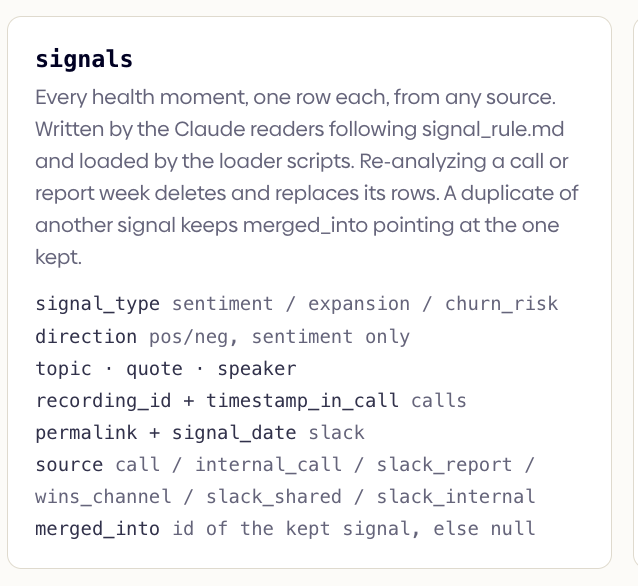
It’s this unstructured > structured step that is so important.
And right now, IMO best to build custom yourself vs. buy a tool that may not meet your needs.
You want to own how this operates. Even something simple like what a positive sentiment signal is for your business may be different than my business. A tool may lock you into their way of it working which you’ll get frustrated with.
An example of what you could build now would be:
Pull in all your call recording, email, and slack data related to all your prospects with active pipeline
An agentic workflow extracts the important deal risks, opportunities, extra context, stakeholders who should be there but are not, any issues around the deal stalling, etc
Logs each piece of data in a database you can reference
This is surfaced in Slack alerts, dashboards, etc (this brings me to the last point)
3. Build dashboards and processes based on this new dataset
For example, we surface our sentiment data in the dashboard in the image below. We also use it in a client summary we review each week, and it powers a client scoring model that builds out our 4x4.
So to sum this up:
Step 1: Figure out all the rich data you have that isn’t really structured in a way that you can use yet.
Step 2: Build data pipelines to gather it, and then use agents to analyze and review it and structure it.
Step 3: Take the now-structured data and surface it, summarize it, display it, and action it however you want.
You now have built an intelligence layer that you can use and sits on top of your underlying core CRM architecture. The best of both worlds.
It’s a fun time to be a builder. But don’t build the wrong thing. 😀
Latest from LinkedIn
What We Are Cookin' Up (for real)
Although your thermostat might tell you otherwise, according to Starbucks and grocery store aisles, it is pumpkin spice season.
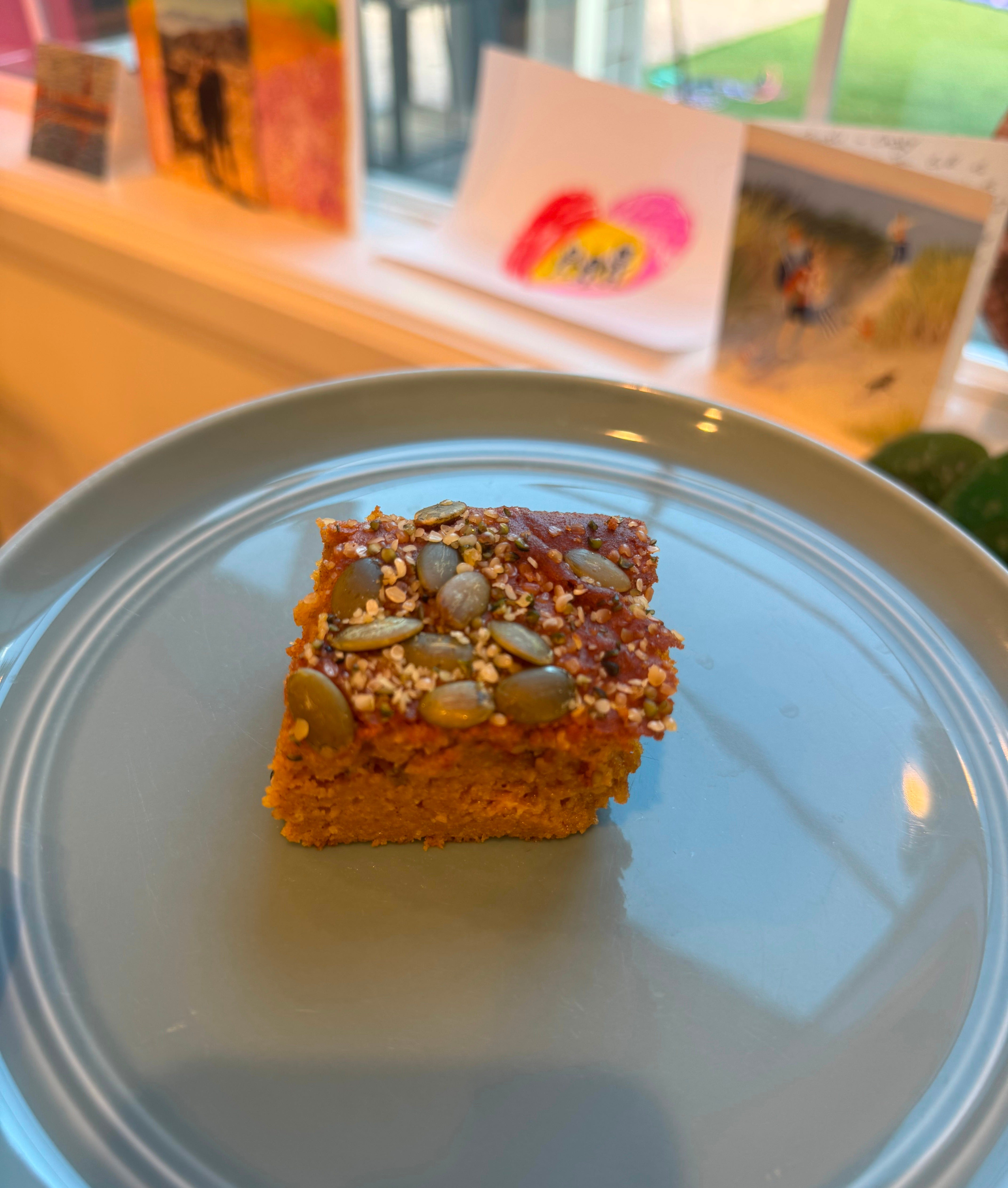
Although I will be skipping out on the Starbucks sugar, this week I started to put some chai masala on top of my homemade flat whites, and this past weekend I made this pumpkin cake (without the frosting) as a homemade snack for my kids’ lunchboxes or after school.
Side note: I realized I was sending my daughter to school with just some chocolate masked in the guise of a “healthy granola bar” so am going to attempt to make her more homemade snacks or replace with things like a protein drink or yogurt pouch for more protein.
For the cake, I subbed the oat flour with gluten-free flour, I used only cinnamon instead of pumpkin spice, and instead of adding the frosting, I topped the cake with hemp and pumpkin seeds.
The result was a super moist and slightly sweet cake that has stayed good for 4+ days now, and it didn’t need the frosting at all!
Links We’re Liking 👍🏻 on LinkedIn
Life flashing before a sales rep’s eyes. So real!
Your enterprise AI strategy without clean data.
Your next valuable AI project will come from chatting with a BDR.
Guess who worked on the operations of those 3 nurture tracks? 🙋♀️
If corporate America was run by women.
🙋♀️ P.S. Is there a topic in GTM Ops or AI that is top of mind for you that you would want me to cover in a future issue? Reply to this and let me know!